Fungus that is killing bats may have met its match
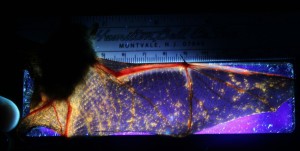
A bacterium known to slow fruit ripening shows promise at slowing down white-nose syndrome—a lethal disease of bats.
The treatment is based on a bacterium that inhibits fungal growth, and was originally studied to see if it could slow the ripening of fruits and vegetables. Researchers are in their second year of trials with little brown bats and Northern long-eared bats, and the results look promising.
The treatment helps all but the most heavily infected bats.
If they’re treated early enough, the bacteria can kill off the fungus before it gains a foothold in the animal. But even bats already showing signs of white-nose syndrome show lower levels of the fungus in their wings after being treated.
Chemicals given off by the bacteria—a strain of Rhodococcus rhodochrous—seems to be the key to killing or slowing the deadly fungus.
The bacterium reduced the amount of mold that formed on bananas and that suggested that R. rhodochrous was an antifungal.
The new treatment could be deployed in an entire cave of hibernating bats without having to handle them or leave chemicals in their environment.
Currently R. rhodochrous is grown using special food to get the desired effect on the fungus and only a limited amount can be produced. But if further study proves the treatment is safe for the bats and doesn’t have any unintended consequences—like harming other organisms—then the team will have to find a way to increase production.

